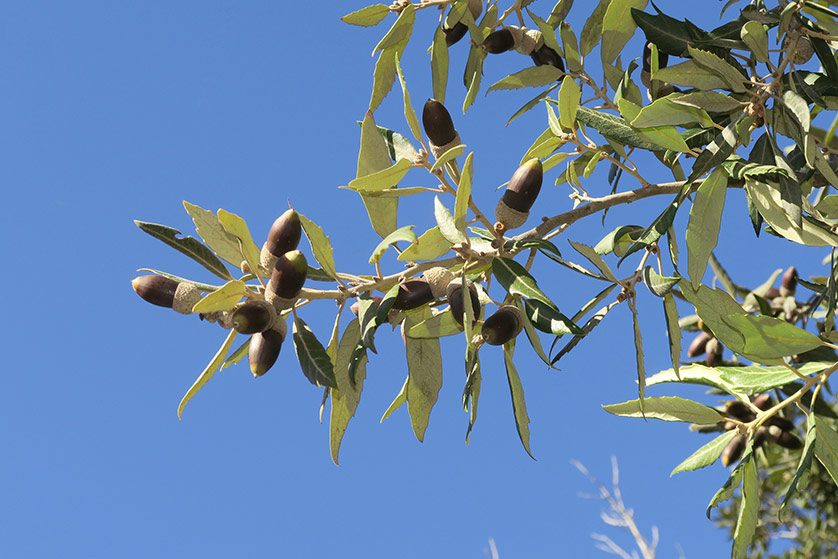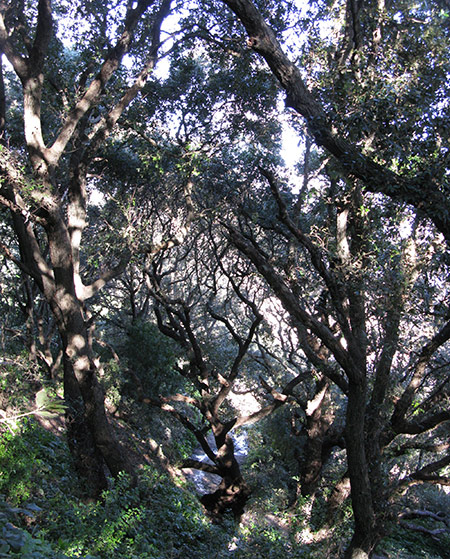

The holm oak is among the oldest trees in Malta and was among the most abundant tree species in prehistoric times. Some trees at Wardija are considered the oldest surviving trees on the islands. Unlike many deciduous oaks of central and northern Europe, the holm oak is evergreen, with tough, leathery leaves about 4–7 cm long, often with small spines along the margins that resemble those of holly. The shape of the leaves gives the tree its common name, ‘holm’, originating from the Old English word for holly.
The tree produces a woody, one‑seeded fruit known as an acorn. Holm oaks can grow up to 15 m in height and are profusely branched, making them ideal for afforestation, soil stabilisation, and creation of a Mediterranean woodland habitat. It is one of several strictly protected tree species in Malta, valued for its ecological, historical, and landscape importance.