
The Aleppo pine is one of the most widely distributed trees in the arid and warm regions of the Mediterranean and was first described from Aleppo, Syria. Fossil and pollen records indicate that it was abundant on the Maltese islands in the past but became virtually eradicated over time; consequently, most, if not all, Aleppo pines found in Malta today are likely the result of reintroductions during the last one or two centuries.
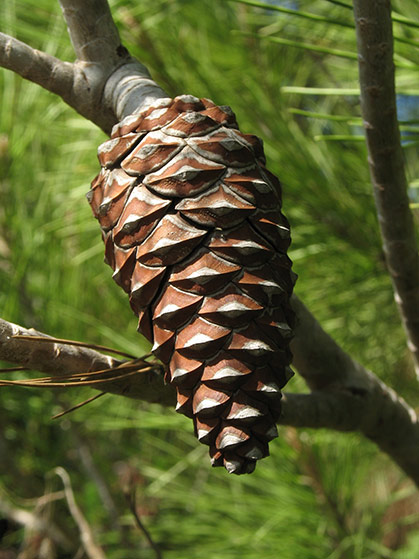
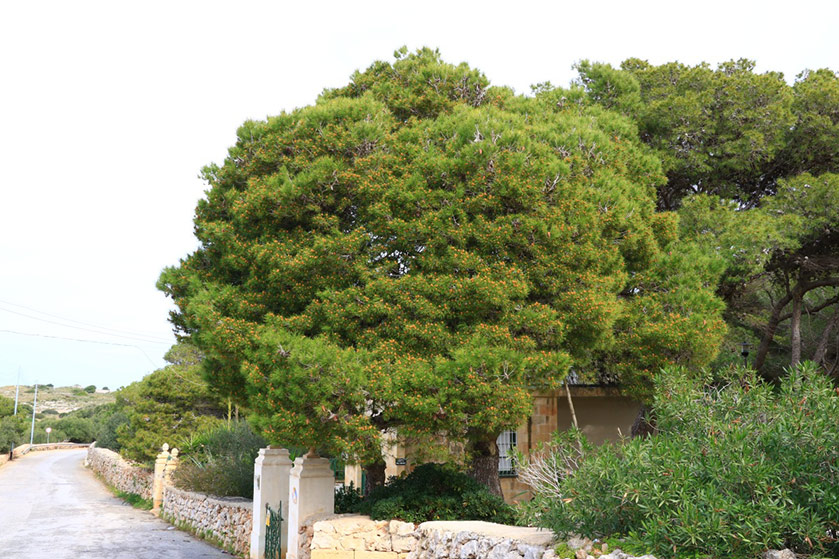
Unlike many pine species growing in northern Europe, the Aleppo pine does not grow very tall; in Malta, it typically reaches about 10 m, often less due to shallow soils. It produces very hard, cone‑shaped fruits that take two to three years to develop and release their seeds. These seeds have membranous wings that help them disperse away from their mother tree, hence allowing the species to spread rapidly and form established populations.
Like other pine trees, its leaves are needle‑shaped, an adaptation that helps it survive adverse conditions, namely extreme drought and high temperatures. It is one of the most widely used tree species in afforestation programmes due to its high success in germination and establishment in Maltese habitats.